Table of Contents
Save the Date: Edu-Family Returns on Saturday, July 18
New STEM Workshops Help Students To Explore Coding and Animation
Celebrating Global Volunteer Month
Edu-Futuro’s Tech for Parents Workshop Welcomes Special Guests
Engaged Parents (Padres Comprometidos) Graduation At Lake Braddock Secondary School
Community Foundation Grant Provides Key Technology Upgrades
AmeriCorps Corner: John Scally
Financial Tips: Protecting Your Family from AI Fraud
Health & Wellness: Health Experts Alarmed About New Vape Approvals
Save the Date: Edu-Family Returns on Saturday, July 18
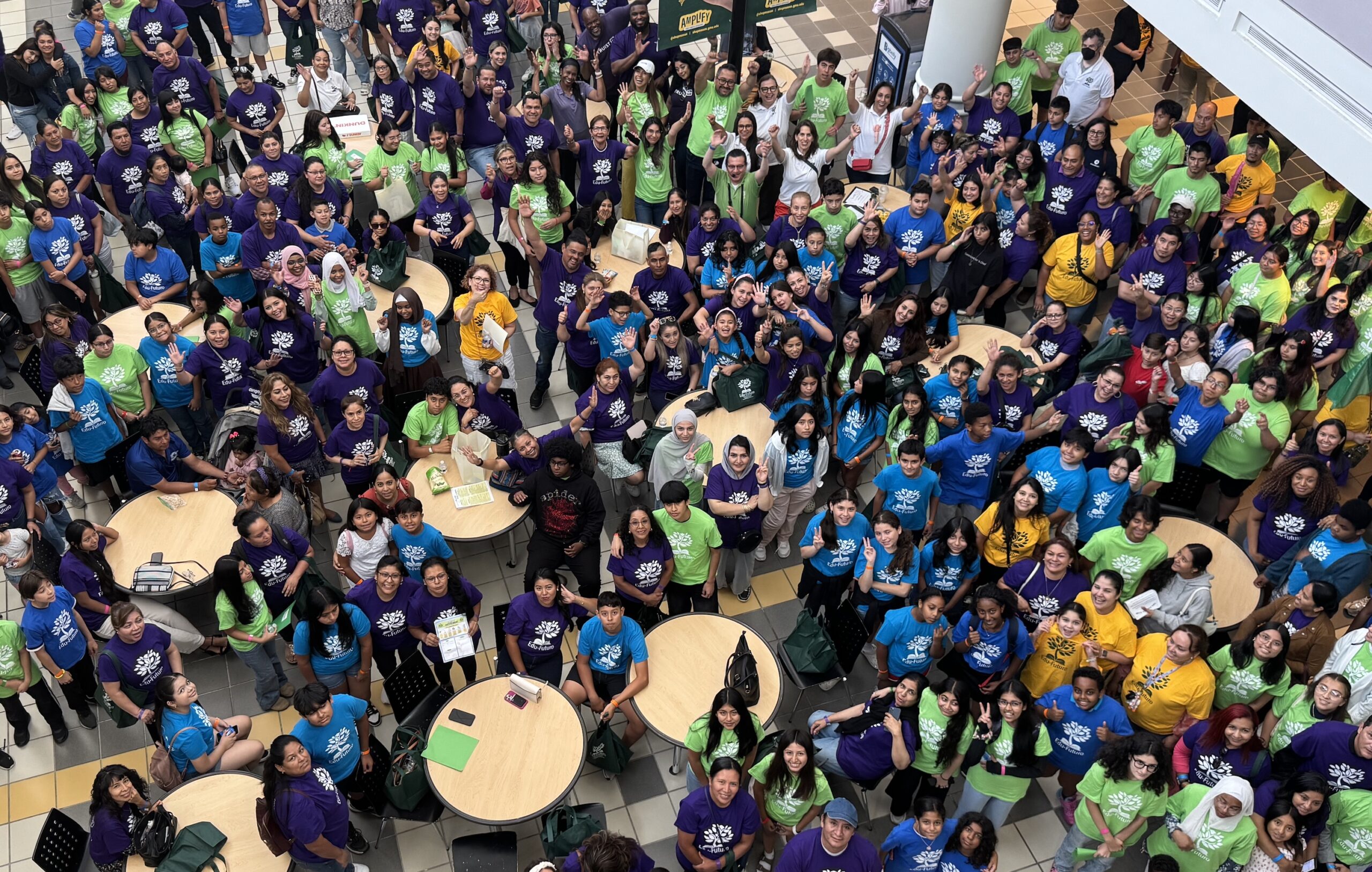 Edu-Futuro is happy to announce the return of one of our most anticipated and highly attended annual events: Edu-Family 2026, taking place on Saturday, July 18 at the George Mason University Fairfax Campus. Last year, nearly 500 students, parents, volunteers, educators, and community leaders came together for this inspiring day dedicated to exploring the possibilities of a college education, and strengthening families through the power of learning and community connection.
The full day of activities offered at Edu-Family introduce parents to the many educational pathways available to their children, while helping students begin to imagine their future academic and professional goals. In addition to educational workshops and presentations, families attending Edu-Family 2026 will have the opportunity to meet representatives from local colleges during a special college fair, hear inspiring stories from career panelists, and connect with community resources designed to support long-term educational success. Free breakfast and lunch will be provided, along with exciting giveaways and activities for the entire family.
Since its launch in 2021, Edu-Family has reflected Edu-Futuro’s belief that college and career success become far more attainable when students and parents learn, grow, and plan for the future together. More than simply a community event, Edu-Family has become a celebration of hope, opportunity, and the extraordinary potential of immigrant and Latino families throughout Northern Virginia.
As anticipation builds for this year’s gathering, Edu-Futuro warmly invites families, volunteers, supporters, and community partners to join us for another unforgettable day of inspiration, exploration, and empowerment. Whether you are searching for educational opportunities, resources for your family, or meaningful ways to invest in the future of our community, Edu-Family 2026 promises to be a powerful reminder that education can transform lives for generations to come.
For more information on Edu-Family, please visit our website at www.Edu-Futuro.org, or contact our Manager of Programs, Dulce Oliveros, at managerofprograms@edu-futuro.org.
New STEM Workshops Help Students To Explore Coding and Animation
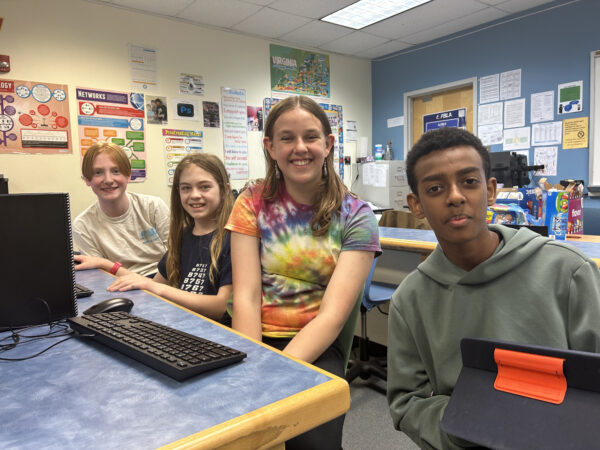 During the week of Monday, April 20, 2026, Edu-Futuro launched two exciting new STEM enrichment initiatives for middle school students at Kenmore Middle School in Arlington: a new series of Python coding workshops, followed by a second series of sessions focusing on digital animation that began on Wednesday, April 22. The pilot programs are designed to introduce students to emerging technology and creative career pathways while strengthening the problem-solving, critical thinking, and digital literacy skills increasingly important in today’s world. If the workshops prove successful in generating strong student engagement and interest, Edu-Futuro hopes to incorporate them into our broader ELP STEM Robotics program, which serves middle school students throughout the academic year.
For many participating youth, the workshops are already opening the door to new interests and future possibilities. “The reason I’m interested in animation is because I became fascinated with animated characters and stories when I was 10 years old in 4th grade,” said Geysel, a Kenmore student. “Also, I really love art! I’ve been drawing for seven years. I made an original character who is made out of light. I’m glad I joined the class because at first, I was scared, but I’m glad I came. Maybe one day I can make an actual game, and I can download it on my phone and my iPad.”
The Python workshop, geared primarily toward 8th-grade students, introduces participants to the fundamentals of computer coding and programming through a series of hands-on activities and small projects. Alongside the coding program, Edu-Futuro’s Animation workshop combines artistic creativity with digital technology using a beginner-friendly pixel art platform. The workshop helps students better understand the intersection between art and technology, while exposing them to creative fields such as animation, digital media, and video game design.
According to Jocelyn Chu, STEM program facilitator and AmeriCorps State and National Volunteer, “It was great to see the students interact with different types of STEM opportunities. Having a strong background at such a young age sets the students up for great long-term technological literacy. The creative aspect of the animation class gives them the chance to combine creativity with STEM. One of my favorite moments was seeing a student who was brand new to coding and Python get excited when he figured out how to write a program that added two numbers together based on user input.
“My future hopes for this program are that it can grow and continue to show students STEM can look like anything. Hopefully, students will have the continued chance to explore which parts of STEM they most identify with, whether those interests are creative, technical, or collaborative in nature.”
For more information about Edu-Futuro’s ELP STEM Robotics and other youth programs, please contact Susana Carpio, our Youth Programs Team Lead, at youthprograms@edu-futuro.org. Edu-Futuro’s Emerging Leaders Program (ELP) is supported in part by grants from Impact100 DC and the Dominion Energy Charitable Foundation.
Celebrating Global Volunteer Month
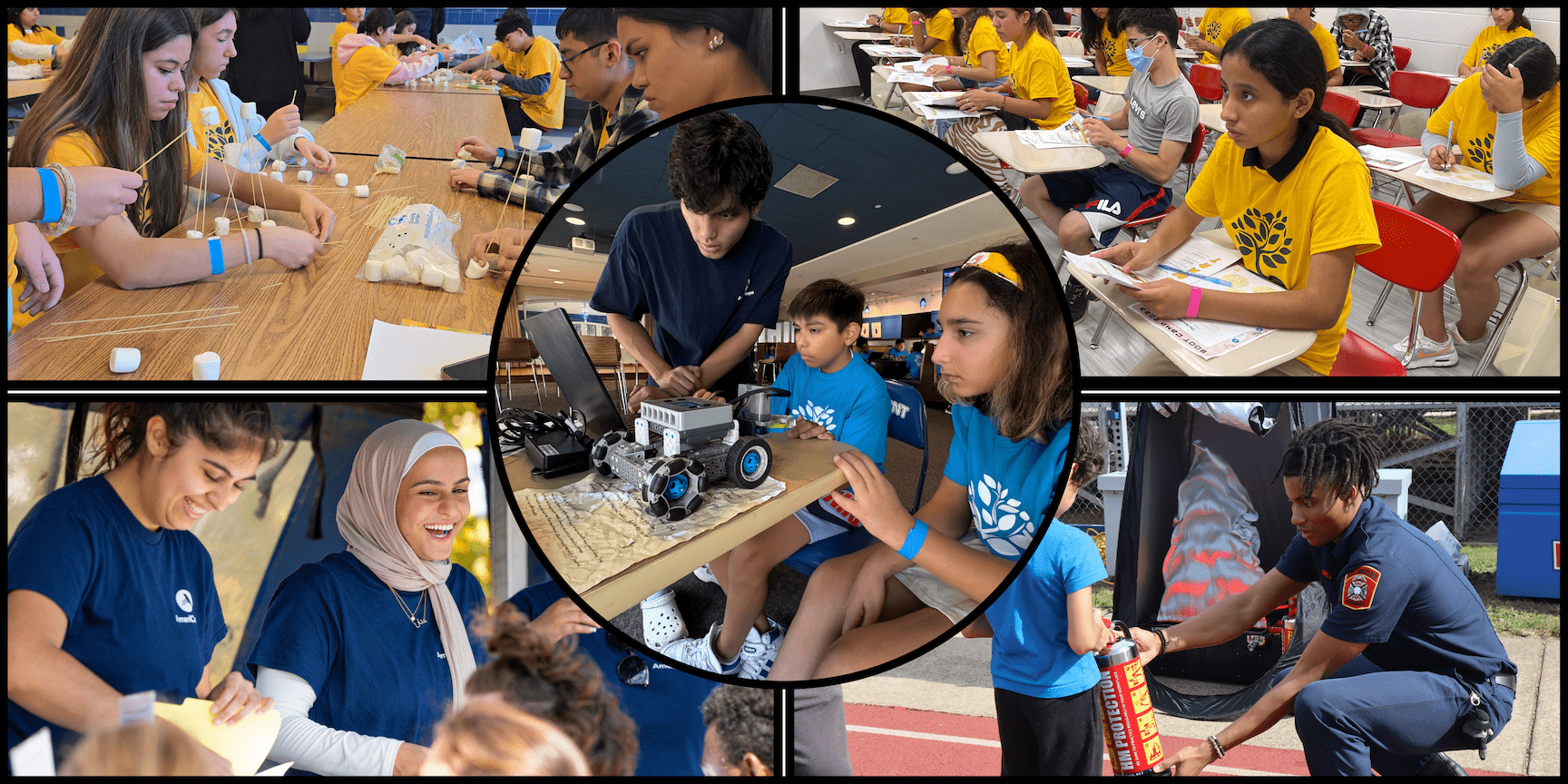
During April’s celebration of Global Volunteer Month, Edu-Futuro proudly recognized the nearly 300 dedicated volunteers who support our students, parents, and programs throughout Northern Virginia — while also encouraging new community members to join this growing movement of service and mentorship. At a moment when immigrant and Latino families are facing growing educational, economic, and emotional challenges, Edu-Futuro remains profoundly grateful for the generosity, compassion, and commitment shown by the volunteers who continue investing their time and talents in our community.
“Our volunteers are at the heart of everything we do,” said Mariana Balgurevich, Edu-Futuro’s Volunteer Coordinator. “They do far more than support programs — they help shape the lives of our students and families in lasting and meaningful ways. Right now, our community needs that support more than ever.”
Throughout the year, Edu-Futuro volunteers play a critical role across both our youth and adult programs. From mentoring students and reviewing college essays and résumés, to serving as career panelists and supporting community events, volunteers help open doors of opportunity for hundreds of Emerging Leaders Program (ELP) students each year. Their guidance not only helps participants strengthen college and scholarship applications, but also builds confidence, leadership skills, and a stronger belief in their own potential. Volunteers are also deeply important to Edu-Futuro’s Workforce Development Services (WDS), where they help working adults strengthen digital literacy, employment readiness, and other professional skills needed to succeed in today’s workforce.
The volunteer experience is equally meaningful for those who serve. Xenia Rivas, Parent & Outreach Team Lead for Arlington County — and a former AmeriCorps volunteer herself — reflected on the importance of giving back through service. “Being able to help students gain skills and knowledge for their educational future has been an amazing experience,” she shared. “It reminds us that giving back is powerful for everyone involved.”
As Edu-Futuro prepares for upcoming ELP and WDS sessions, we are actively seeking new volunteers interested in supporting students and adults through mentorship, essay and résumé review, public speaking support, career panels, and other educational activities. Whether volunteering occasionally or becoming deeply involved throughout the year, community members have countless opportunities to make a lasting difference in the lives of local families. For more information on becoming an Edu-Futuro volunteer, please contact our Volunteer Coordinator, Mariana Balgurevich, at volunteer@edu-futuro.org.
Edu-Futuro’s Tech for Parents Workshop Welcomes Special Guests
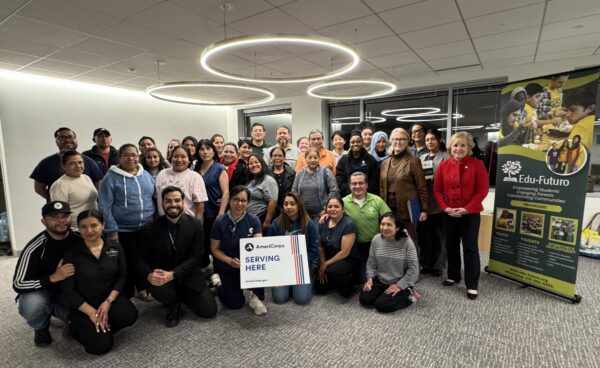 On the evening of April 7, 2026, Edu-Futuro proudly welcomed three distinguished guests to the Mark Center in Alexandria, Virginia, for a special site visit of our core Workforce Development Services (WDS) program, Tech for Parents. Joining Edu-Futuro staff and participating parents were Delegate Vivian Watts, who represents Virginia’s 14th House District in Fairfax County; Julie Strandlie, Chair of the Virginia Service Foundation, an organization that supports AmeriCorps initiatives throughout Virginia; and Analise Gammel, Statewide Engagement Officer for Serve Virginia, the state commission that oversees AmeriCorps programming across the Commonwealth.
The visit provided an important opportunity for community and state leaders to witness firsthand the transformative impact of Tech for Parents, the digital literacy and workforce readiness initiative Edu-Futuro created in response to the devastating economic consequences of the COVID-19 pandemic on immigrant and Latino families. Since its creation, the program has evolved into the centerpiece of our WDS pillar, empowering hundreds of parents with the technology skills needed to apply for jobs online, communicate professionally through email, participate in virtual meetings through Zoom, and confidently navigate essential digital tools such as Google Translate.
During the visit, guests observed parents actively participating in classroom instruction and engaging directly with technology designed to strengthen both their professional opportunities and their ability to support their children’s educational success. The evening highlighted not only the growing importance of digital literacy in today’s workforce, but also the determination and resilience of the immigrant families Edu-Futuro is privileged to serve.
“Many participants are balancing long work hours, family responsibilities, and daily challenges, so seeing them take time to invest in themselves and their future was very inspiring,” explained Parent Support and Workforce Development Specialist, Jorge Manzenada. “Having Delegate Vivian Watts, Julie Strandlie, Analise Gammel, and the AmeriCorps representatives visit the program was especially meaningful for the participants. You could see how important it was for them to feel seen and appreciated.”
As Tech for Parents continues to expand, Edu-Futuro hopes to reach even more immigrant and Latino families seeking the digital literacy skills increasingly necessary to succeed in today’s economy. “My hope for the future is that programs like Tech for Parents continue growing and reaching more families and community members,” Jorge said. “Beyond computer skills, I hope participants leave feeling more confident, connected, and motivated to continue learning.”
For more information on Edu-Futuro’s Workforce Development Services (WDS), please contact Joceline Briceño, Workforce Development Team Lead, at workforce@edu-futuro.org.
Engaged Parents (Padres Comprometidos) Graduation At Lake Braddock Secondary School
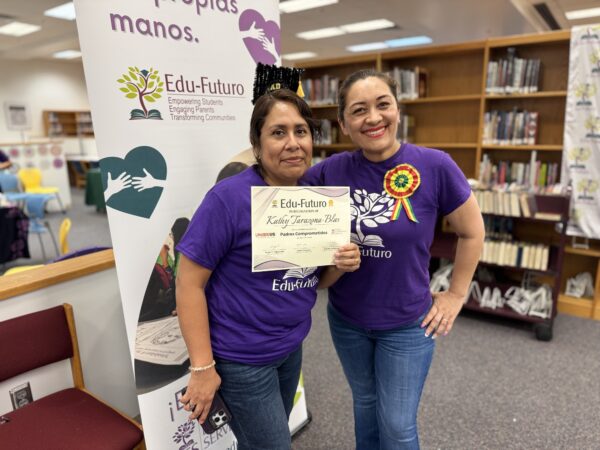 On Thursday, April 23, 2026, Edu-Futuro’s Parent Empowerment Services (PES) proudly celebrated the graduation of 30 parents who successfully completed the Padres Comprometidos (Engaged Parents) program at Lake Braddock Secondary School. Led by the energetic and inspiring Yeimy Sánchez, Edu-Futuro Parent Support Specialist, the program provided participating families with practical tools and guidance to better understand local school systems, strengthen communication with teachers and counselors, and become more actively engaged in the education of their children.
“One of the most important things I learned here was commitment — commitment to my children and also to myself,” explained Dayana, one of the graduating parents. “I learned the value of setting goals and having the determination to achieve them, including my commitment to attend every Edu-Futuro workshop without any absences. My children are happy, and today they are here celebrating with me along with my husband. He was not able to attend the classes, but he supported me behind the scenes.”
For Edu-Futuro staff members, the graduation ceremony was both emotional and inspiring.
“The graduation was a moment of immense pride for our team,” said Natalie Gutiérrez, Parent Support Team Lead. “The most memorable part for me was watching the parents come forward to receive their certificates as their names were called. Seeing their joy and their renewed commitment to being engaged, present parents was incredibly inspiring. This is exactly why we do this work — to empower parents to realize that they can achieve anything they set their minds to.”
As Edu-Futuro continues expanding Parent Empowerment Services throughout Northern Virginia, the organization hopes to bring Padres Comprometidos to even more schools and communities in the future, ensuring that more families have access to the guidance, encouragement, and support needed to thrive. For more information about Edu-Futuro’s Parent Empowerment Services (PES), please contact Natalie Gutiérrez, Parent Support Team Lead, at adultprograms@edu-futuro.org.
Community Foundation Grant Provides Key Technology Upgrades
 Earlier this year, Edu-Futuro was proud to be selected as a Community Investment Fund grantee by the Community Foundation for Northern Virginia. The grant was awarded to strengthen Edu-Futuro’s operational capacity by ensuring that staff members have access to the technology and tools necessary to deliver our high-quality educational, workforce development, and family support services effectively and efficiently.
Through this important investment, Edu-Futuro has replaced several end-of-life laptops currently used by program staff across multiple service areas. Reliable technology infrastructure has become essential to the successful operation of our programs, particularly as staff members continue delivering services through a combination of in-person, virtual, and hybrid formats. Whether helping parents navigate online resources, complete employment applications, participate in digital literacy training, or supporting students as they prepare for college and future careers, access to modern technology directly strengthens the quality and consistency of Edu-Futuro’s programming.
“Edu-Futuro is deeply grateful to the Community Foundation for Northern Virginia for investing not only in our organization, but also in the long-term success of the students and families we serve throughout the region,” said Director of Development, Zachary Hoskins. “Their support will help ensure that our staff can continue providing responsive, high-quality services, while expanding opportunities for immigrant and Latino families across Northern Virginia.”
If you would like to become a sponsor, partner, or know of an organization that might like to become a contributor to Edu-Futuro, please email our Director of Development, Zachary Hoskins, at directorofdevelopment@edu-futuro.org.
AmeriCorps Corner: John Scally
 Edu-Futuro’s impact is made possible through the invaluable support of both AmeriCorps State and AmeriCorps VISTA members. Our cohort of AmeriCorps State members plays a critical role in the lives of our students and parents by serving as facilitators in the Emerging Leaders Program (ELP) and Workforce Development Services (WDS). Meanwhile, our AmeriCorps VISTA members work on a variety of key capacity-building projects, including updating our beneficiary database and developing brand-new curricula for students and parents. This section highlights the outstanding work being carried out by Edu-Futuro’s AmeriCorps members and VISTA volunteers. Today, we feature AmeriCorps VISTA member John Scally.
“Hi everyone! I'm the AmeriCorps VISTA Paralegal Research Specialist at Edu-Futuro, where I support mission-driven initiatives through research, outreach, and community engagement. My background spans international economic development, nonprofit leadership, and private-sector experience — including service with the Peace Corps — which has deepened my commitment to equitable, grassroots-driven change. After relocating to Northern Virginia in 2024, I sought a meaningful way to contribute my skills to a local organization aligned with my values. Edu-Futuro's dedication to empowering marginalized communities and youth resonated deeply with me, and joining through AmeriCorps offered the perfect opportunity to grow while giving back. I'm thrilled to collaborate with such a passionate team and community.
“As Edu-Futuro's AmeriCorps VISTA Paralegal Research Specialist, I research legal, accreditation, and financial frameworks, helping turn vision into actionable strategy. I interview early childhood education experts and community leaders to ensure our planning reflects real-world needs and best practices. While research is my primary focus, I also support fundraising efforts, chaperone trips, and adapt to emerging organizational priorities.
“Serving in this role feels deeply meaningful, especially as communities nationwide navigate significant social and economic challenges. It’s a privilege to engage with my new Northern Virginia community and contribute to programs that will positively impact thousands of residents. I’m inspired to help advance Edu-Futuro’s mission, knowing the organization serves as a critical resource that empowers families to improve their education, well-being, and long-term stability. Ultimately, this position allows me to translate my skills into tangible community support — an opportunity I consider both an honor and a responsibility.”
For more information on Edu-Futuro’s AmeriCorps VISTA program or AmeriCorps State program, please contact Joy Harvey, AmeriCorps Programs Coordinator, at americorps@edu-futuro.org.
Financial Tip
Protecting Your Family from AI Fraud
 A few years ago, most scam phone calls were easy to recognize. The voice sounded robotic, the story made little sense, or the caller claimed you had won a fake prize. Today, however, artificial intelligence is making fraud far more convincing — and much more dangerous.
Across the country, families are now reporting frightening phone calls in which scammers use artificial intelligence to clone the voices of loved ones. In some cases, parents receive calls that sound exactly like their children crying and begging for help after a supposed car accident or kidnapping. Other scams use AI-generated voices to impersonate government officials, bank representatives, or immigration authorities in order to pressure victims into sending money or revealing sensitive information.
The rapid growth of AI-related scams is already producing alarming results. According to findings highlighted in the FBI’s 2025 Internet Crime Report, Americans lost billions of dollars last year to online fraud schemes, with artificial intelligence increasingly being used to make scams more convincing and difficult to detect. The report, which tracks nationwide cybercrime and fraud trends, warned that criminals are rapidly adopting AI tools to impersonate victims’ relatives, financial institutions, and government agencies.
Meanwhile, a 2026 survey conducted by Hiya — a global call protection and spam-blocking technology company — found that nearly one in four Americans reported receiving a deepfake voice call within the previous 12 months. Researchers at the University of Zurich also recently concluded that most people struggle to reliably distinguish between authentic human voices and AI-generated imitations, demonstrating how quickly this technology is advancing.
For immigrant and Latino families, these scams can be especially harmful because fraudsters often exploit fear, urgency, and language barriers. Scammers may pretend to represent immigration agencies, law enforcement, schools, or financial institutions. Others target grandparents and older adults by creating fake emergencies involving younger family members.
The good news is that there are important steps families can take to protect themselves.
First, remember that scammers rely on panic. If you receive a call claiming that a loved one is in danger and urgently needs money, pause before acting. Try to contact the family member directly using a phone number you already know. Never trust a number provided by the caller.
Second, consider creating a private “family safe word” that only close relatives know. Consumer safety experts increasingly recommend this simple strategy because it allows family members to quickly verify whether an emergency call is genuine. Deepfake and cybersecurity specialists interviewed by NBC News in 2025 identified family code words as one of the simplest and most effective protections against AI voice-cloning scams.
Third, be cautious about how much personal audio and video content is publicly shared online. According to the Identity Theft Resource Center, scammers can sometimes clone a person’s voice using only a few seconds of audio collected from social media videos, voicemail greetings, or online recordings. Families should also remember that legitimate government agencies and financial institutions generally do not demand immediate payment through gift cards, wire transfers, cryptocurrency, Zelle, or payment apps. High-pressure tactics and demands for secrecy are major warning signs of fraud.
Finally, talk openly about scams with parents, grandparents, and teenagers. Many victims feel embarrassed after being targeted, but consumer protection experts stress that anyone can fall victim to sophisticated AI fraud. The technology is specifically designed to manipulate emotions and create confusion.
As artificial intelligence continues evolving, scams will likely become even more realistic. Staying informed, slowing down during emergencies, and carefully verifying information can help protect families from becoming victims. In today’s digital world, one of the most important forms of consumer protection is learning not to trust every voice we hear on the phone — even when it sounds familiar.
Health & Wellness
Health Experts Alarmed About New Vape Approvals
 For years, public health organizations across the United States have been fighting to reduce teen smoking and nicotine addiction. These efforts helped drive youth cigarette smoking rates to historic lows. Today, however, many doctors, researchers, and parent advocates fear that flavored vaping products could reverse much of that progress.
Concern intensified earlier this month after the U.S. Food and Drug Administration (FDA) approved several fruit-flavored electronic cigarettes for adult use, including mango- and blueberry-flavored vape products. The decision marked the first time the FDA authorized non-tobacco fruit-flavored vaping products in the United States, representing a major shift in federal policy.
The approval immediately triggered criticism from pediatricians, anti-smoking organizations, and consumer advocates who argue that sweet flavors remain one of the primary reasons teenagers begin vaping. According to the Centers for Disease Control and Prevention and the FDA’s 2024 National Youth Tobacco Survey, electronic cigarettes continue to be the most commonly used tobacco product among middle and high school students, with more than 1.6 million youth currently using e-cigarettes.
Many health experts expressed particular concern because federal regulators previously rejected more than one million flavored vaping products specifically due to fears about youth appeal. The Washington Post reported that the new approvals represent “a significant shift” in the FDA’s long-standing position on flavored nicotine products.
Public health researchers also warned that the decision could send a confusing message to families and teenagers. In interviews with ABC News, pediatricians and advocacy organizations questioned whether any age-verification system can fully prevent flavored products from reaching minors. The Campaign for Tobacco-Free Kids warned that authorizing fruit-flavored vapes could undermine years of progress in reducing teen nicotine use.
Additional concern emerged after reports revealed that political pressure may have influenced the FDA’s decision-making process. According to reporting from STAT News and the Wall Street Journal, former FDA Commissioner Dr. Marty Makary initially resisted approving the flavored products because of concerns about youth vaping and broader public health consequences. STAT News further reported that several public health experts viewed the situation as unusual because political officials appeared increasingly involved in scientific decisions traditionally guided by medical and public health evidence.
Health researchers continue warning that flavored products play a major role in attracting young users. The Campaign for Tobacco-Free Kids recently reported that nearly 95% of young people who currently vape use flavored products, while more than 92% identified flavored products as their introduction to nicotine use. Fruit flavors remain among the most popular choices among teenagers.
Nicotine exposure during adolescence creates serious health concerns because the teenage brain continues developing well into early adulthood. According to the U.S. Surgeon General and CDC researchers, nicotine addiction during adolescence can affect learning, memory, mood, attention, and impulse control. Young users may also become more vulnerable to anxiety, depression, and future substance dependence.
Modern vaping devices also contain far higher nicotine concentrations than many parents realize. Public health organizations such as the Community Anti-Drug Coalitions of America warn that some disposable vaping devices may contain nicotine amounts comparable to an entire carton of cigarettes. Bright packaging, candy-like flavors, and aggressive social media marketing have further increased concern among educators and parents.
Families can take important steps to protect children and teenagers from nicotine addiction. Pediatricians recommend maintaining open, nonjudgmental conversations about vaping, peer pressure, stress, and advertising. Parents should also become familiar with modern vaping products, many of which resemble USB drives, pens, or cosmetic devices.
While debate over flavored vaping products will likely continue, many health experts remain united on one point: flavored nicotine products pose unique risks for teenagers because sweet flavors, colorful branding, and social media marketing can make dangerous products appear harmless. For families already navigating the pressures of adolescence, protecting young people from nicotine addiction requires vigilance, communication, and accurate information grounded in science rather than marketing.
Edu-Futuro’s Strengthening Families 10-14 Program, which helps teens to reduce such risky behaviors as tobacco use and vaping, is sponsored in part by a generous grant from the Virginia Foundation for Healthy Youth (VFHY), empowering Virginia's youth to make healthy choices by promoting active, nutritious and tobacco-free living.