Table of Contents
Courage for a Cause: Edu-Futuro Marks 28 Years of Dedicated Public Service at Anniversary Gala
Students Test New Skills at ELP STEM Robotics Competition
Campus Visit: Edu-Futuro Students Travel to the College of William & Mary
Edu-Futuro Opens New Office Location in Western Fairfax
Announcing Edu-Futuro’s Spring Fundraising Campaign!
AmeriCorps Corner: Nely Garcia
Financial Tips: Protecting Your Family from Phone Scams Targeting Immigrant Communities
Health & Wellness: Tobacco Use and Academic Success: What Families Need to Know
Courage for a Cause: Edu-Futuro Marks 28 Years of Dedicated Public Service at Anniversary Gala
On Friday, March 20, 2026, Edu-Futuro welcomed nearly 300 guests for an evening of celebration, inspiration, and community at our 28th Anniversary Gala: Courage for a Cause. Held once again at the Falls Church Marriott Fairview Park, the event brought together community leaders, representatives from local school systems, and Edu-Futuro’s dedicated volunteers and supporters for a powerful night centered on the voices and achievements of the families we are privileged to serve. The Gala also stood as our most successful fundraising event to date, generating more than $150,000 in critical support for underserved families across Northern Virginia – an increase of over 114% from last year’s Gala!
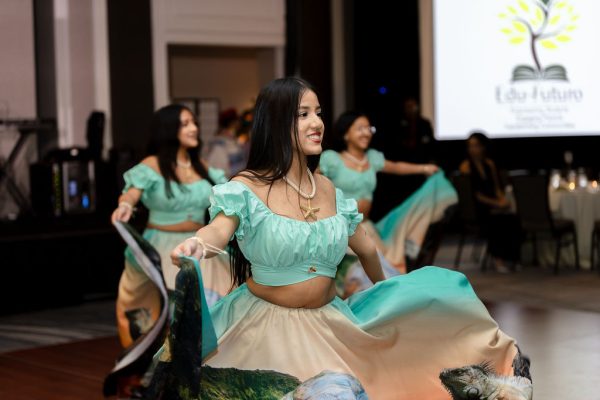
The evening began on a vibrant and joyful note with a traditional dance performance by adults and children from the nonprofit group, Raíces Ecuatorianas. Their colorful presentation set the tone for a celebration rooted in culture, resilience, and community pride. Guests were then welcomed by our Master of Ceremonies, NBC4-Washington and Telemundo 44 reporter, Juliana Valencia, who returned for her third consecutive year as host. Her warmth and professionalism once again guided the evening with energy and purpose.
Dr. Marjorie L. Myers, President of Edu-Futuro’s Board of Directors, officially opened the program with a message that underscored the enduring importance of education. “Now more than ever,” she shared, “education remains the most powerful tool we have to create opportunity, strengthen families, and build a more just and inclusive future. No matter the challenges ahead, Edu-Futuro will continue to stand alongside our students and parents -- providing the guidance, resources, and support they need to succeed. Together with your partnership, we will empower our families to pursue and reach their dreams.” Next, Edu-Futuro’s Executive Director, Jorge E. Figueredo, brought out the “Courage for a Cause” theme with an emotional speech that attendees greeted with a standing ovation.
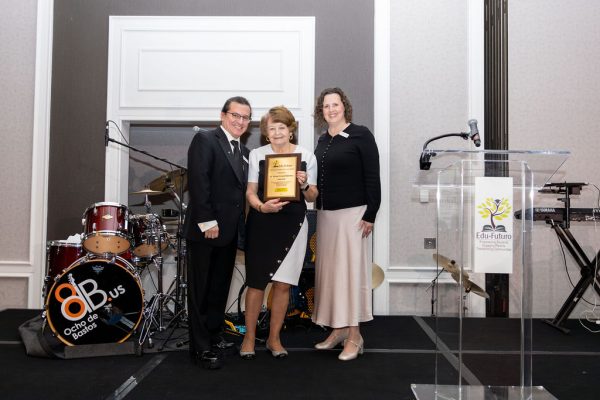
Another highlight of the evening was the recognition of our Community Partner of the Year and Keynote Speaker, Dr. Emma Violand-Sánchez. A tireless advocate for immigrant and refugee families, Dr. Violand-Sánchez has played a transformative role in shaping educational access in Northern Virginia. She made history as the first Latina teacher in Arlington, and later became the first Latina to chair the Arlington School Board. Among her many accomplishments, she established Virginia’s first bilingual GED program and co-founded the Dream Project, which has helped thousands of first-generation students navigate the path to higher education. Dr. Violand-Sánchez was also one of the founding parents of Escuela Bolivia, the initiative that eventually evolved into Edu-Futuro. Her lifelong commitment to equity and opportunity has opened doors for countless families across the region.
Throughout the evening, the most powerful moments came directly from the voices of our students and parents -- testimonials that brought Edu-Futuro’s mission to life in deeply personal ways.
Sofía, now a freshman at George Mason University majoring in History, reflected on her journey from an Emerging Leaders Program II (ELP-II) participant to a successful college student. Just one year ago, Sofía received an extraordinary $332,200 in scholarship offers. Today, she continues her path through ELP-III, which supports students already enrolled in college. “I was able to gain the tools to succeed because of Edu-Futuro,” she shared. “Because of your support, I didn’t just apply to college -- I was accepted to almost every single school I applied to. This past fall, I made the Dean’s List and maintained a 3.7 GPA by using the time management skills we learned in the program.”
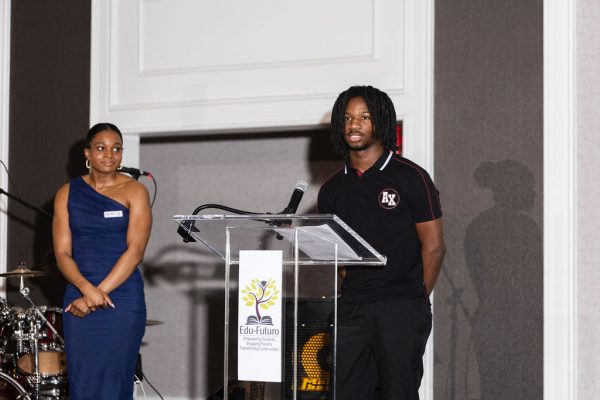
De’Quan, a senior at Washington-Liberty High School, spoke about the guidance that helped him navigate the complex college application process. With an impressive $427,271 in scholarships and financial aid, De’Quan has been accepted to multiple institutions and will attend Virginia Tech on a full-ride scholarship in Civil Engineering, with a minor in Spanish. “Behind every application and every deadline, there were people making sure I didn’t have to go through it alone,” he said. “That made all the difference.”
Additional student voices reinforced the breadth of talent and determination within the Edu-Futuro community. Kimberly, a senior at Thomas Jefferson High School for Science and Technology, has already earned an extraordinary $732,755 in scholarships and financial aid and plans to study Journalism and Engineering. Matías, a senior at Gar-Field Senior High School, will attend Virginia Tech this fall to pursue Creative Technology or Graphic Design, supported by $77,350 in scholarships.
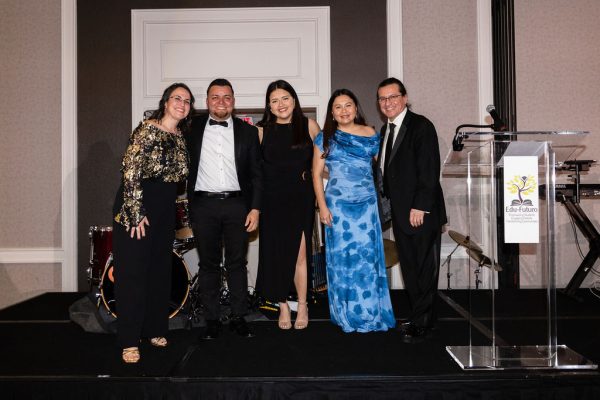
The evening also featured a deeply moving family testimony from Ingrid and Marvin, a married couple who completed Edu-Futuro’s GED Certification Program together. Joined by their daughter Kenia, who supported them throughout their journey, the couple shared a powerful story of perseverance and mutual encouragement. As parents of two daughters, Ingrid now aspires to pursue a career in nursing, while Marvin is working toward certification in electricity. Their journey exemplifies the transformative power of education -- not just for individuals, but for entire families.
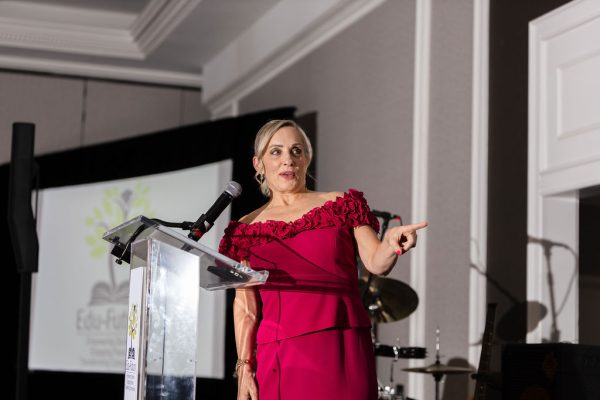
During the Gala, Edu-Futuro also took the opportunity to recognize key community partners whose support makes our work possible. Arlington Community Federal Credit Union was honored as Corporate Partner of the Year, with President and CEO Karen Rosales accepting the award on behalf of the organization. For more than a decade, the Credit Union has demonstrated a deep commitment to supporting grassroots nonprofit organizations and strengthening financial opportunity for underserved communities. Additional recognitions included Michael D. Briscoe of the City of Alexandria Workforce Development Center and Ding-Lynn Ledgard, who received a Special Recognition Award for her dedicated volunteer service in the GED program.
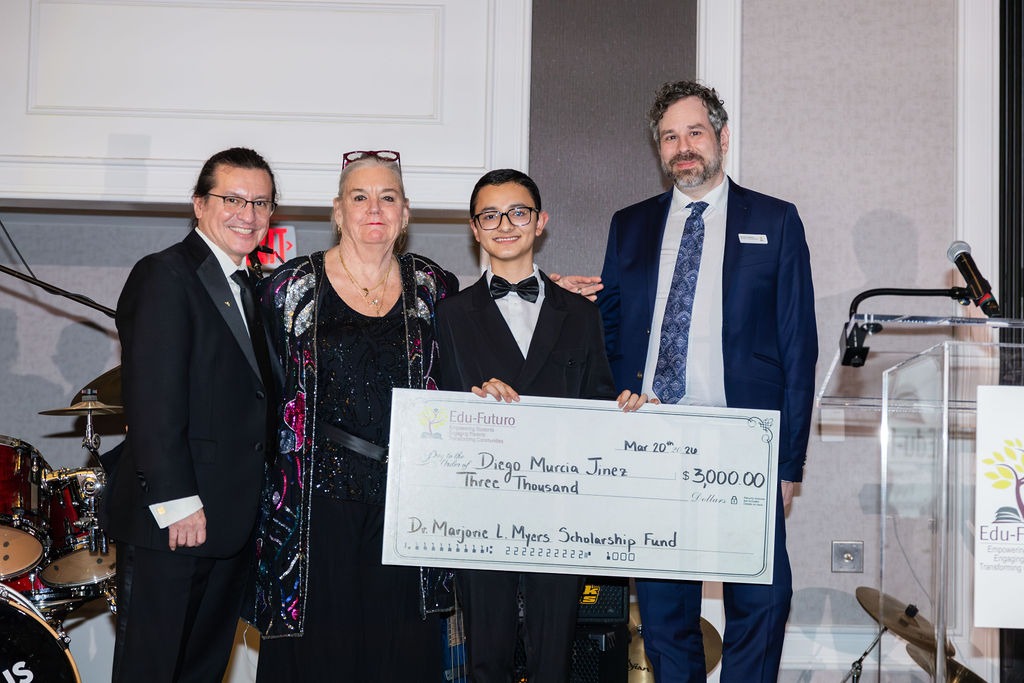
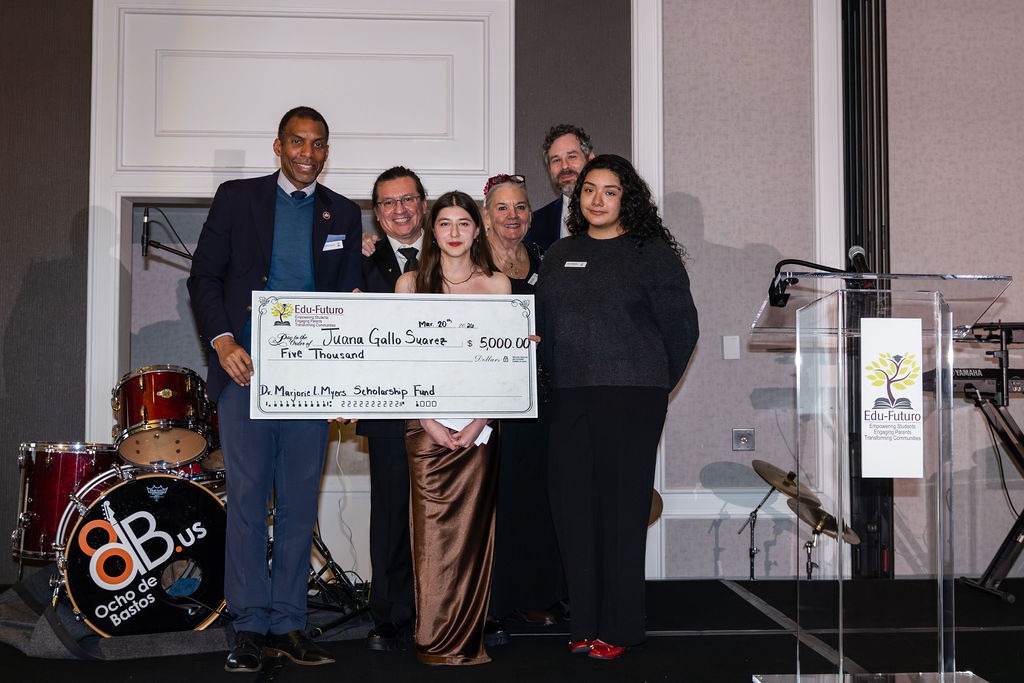
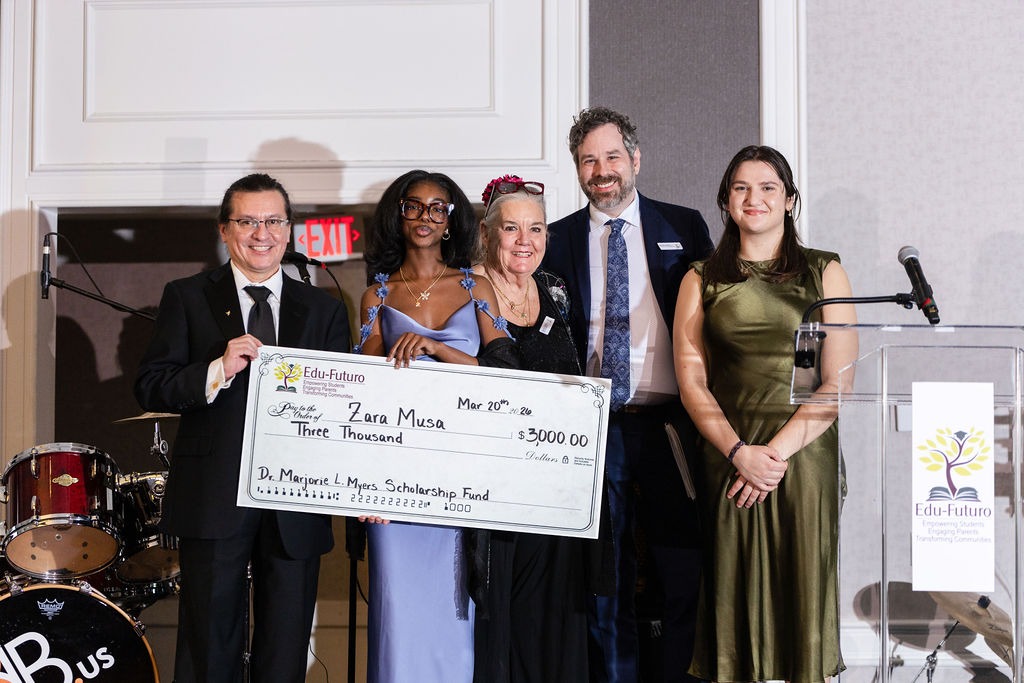
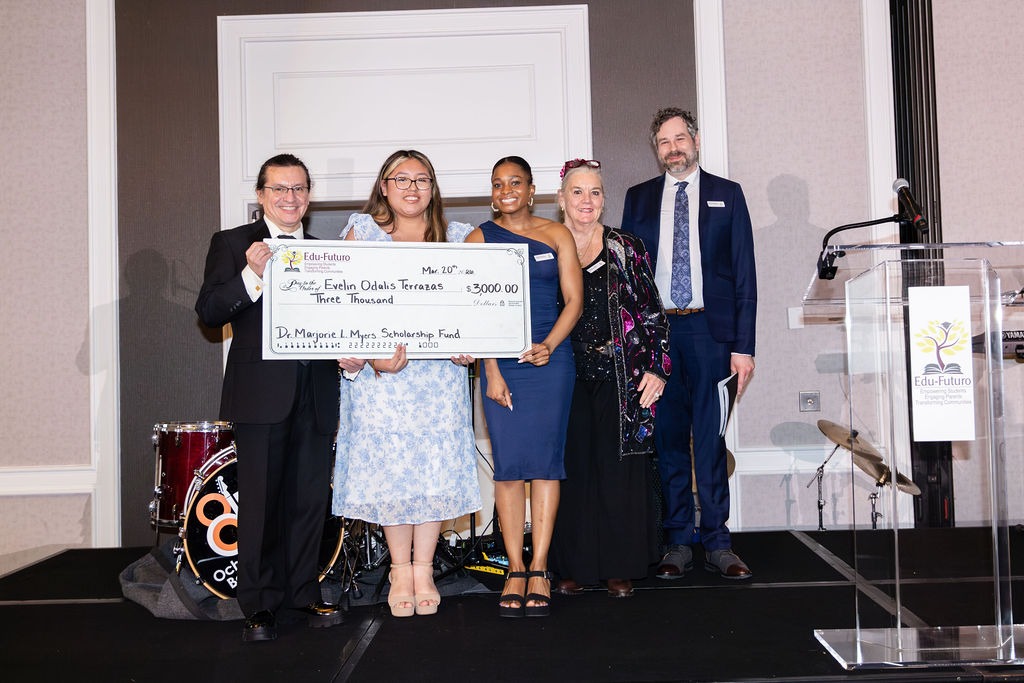
The evening concluded with one of the most anticipated moments of the Gala: the presentation of the Dr. Marjorie L. Myers Scholarships. This year’s $5,000 scholarship was awarded to Juana, a senior at Robinson Secondary School who will attend George Mason University to study Aerospace Engineering -- a field that reflects both her intellectual rigor and bold ambition. Despite financial challenges, she has remained steadfast in her pursuit of higher education and has already secured additional scholarship support to continue her studies.
Three additional students were awarded $3,000 scholarships. Zara, a senior at Washington-Liberty High School, will study International Relations and has already earned more than $200,000 in scholarships and financial aid. Diego, a senior at Stafford High School, plans to study Psychology and follows in the footsteps of his brother, last year’s Myers Scholarship recipient. Evelin, a senior at Arlington Tech, will pursue a pre-med track in Biology or Psychology after being accepted to several universities, including the University of Pittsburgh, Penn State, and George Mason University.
Finally, we are honored to recognize the corporate partners and individual donors who generously sponsored this year’s Gala. Their support made this event possible and continues to empower the success of our students and families.
Visionaries
- The OCC
- John Andelin & Ginger Geoffrey
Champions
- Clifford Chance
- Truist
- The APA Fund
Advocates
- Bravo Media Corp
- Robert Panfil & Dr. Katherine Panfil
- Windfall Funders
Guardians
- Arlington Community Federal Credit Union
- CareFirst BlueCross BlueShield
- Deloitte
- Priority One Services
- Synergy Solutions Group
Defenders
- Aminad
- Dominion Energy
- Guidehouse
- Luncheras Disi
- Evan Baker
- Julie Bauer
- Cuadros Family Fund
- Leroy Jackson, Jr. & Rebecca Vargas-Jackson
- Kate McCarthy & Ashok Kumar
- Nehme Family Giving Fund
- Lillian Vagnoni
If you would like to become a contributor, or know of an individual or organization that might like to become a contributor to Edu-Futuro, please email our Director of Development, Zachary Hoskins, at directorofdevelopment@edu-futuro.org. If you are interested in becoming an Edu-Futuro volunteer, please contact our Volunteer Coordinator, Mariana Balgurevich, at volunteer@edu-futuro.org.
Students Test New Skills at ELP STEM Robotics Competition
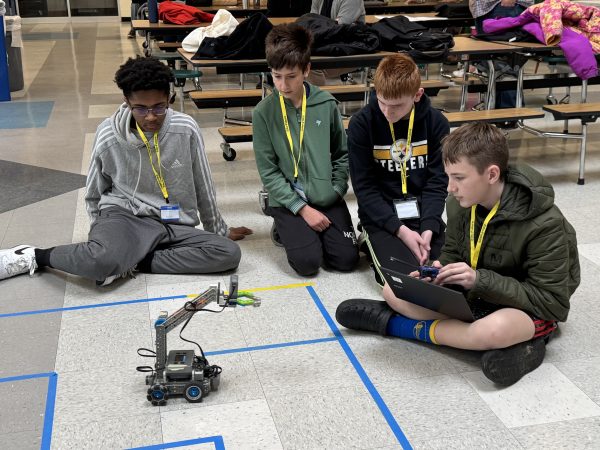 On Saturday, March 7, 2026, sixteen Edu-Futuro middle school students joined friends and family at Kenmore Middle School in Arlington County for the culminating event of our year-long ELP STEM Robotics program. Beginning at 9:00 a.m., participants from Gunston Middle School, Hayfield Secondary School, and Kenmore Middle School showcased the skills they had been developing since October 2025 at our annual ELP STEM Robotics competition. The event offered students a valuable opportunity to demonstrate their creativity, teamwork, and problem-solving abilities, while facing the time pressure of programming their robots to follow specific routes, and complete such tasks as capturing and carrying a cube across the finish line.
After an extremely close competition, we are proud to congratulate this year’s winning team from Gunston Middle School! We also celebrate the outstanding effort and innovation demonstrated by all participating students.
Designed for students in grades 6–8, the ELP STEM Robotics program provides a unique, hands-on introduction to science, technology, engineering, and mathematics in a collaborative and supportive environment. For many students, the program provided a transformative introduction to engineering concepts. “My experience with robotics was enlightening because it gave me a hands-on approach to trial and error in engineering,” said Nael, a seventh-grade student at Kenmore Middle School. “My favorite part about the program is that I could learn to build anything from all the pieces -- even a truck if you wanted. I think after-school programs are very important because they teach students skills they want to learn without the stress of grades.”
Throughout the program, facilitators played a critical role in guiding students as they navigated challenges and refined their designs. By encouraging persistence and collaboration, they helped students develop the confidence to troubleshoot problems and think creatively. This supportive environment allowed participants to move beyond frustration and embrace the iterative process that is essential to engineering and innovation.
“I had a great time planning and facilitating the robotics competition,” said Jocelyn Chu, an AmeriCorps member. “A lot of work went into designing the challenges and rules, as well as organizing the overall event. It was incredibly rewarding to see our students rise to the challenges with enthusiasm. Once we began talking about the competition, I could see their excitement immediately.”
Jocelyn also described how preparation at each site contributed to the success of the event. “At Gunston, I held a mini-competition to identify students who were ready to compete. It quickly became clear who had the determination and skills to participate. Even though snow days forced us to postpone the event and limited team practice time, the students came together on competition day and worked almost flawlessly. Watching that teamwork come together was incredibly satisfying.”
Beyond the competition itself, the event highlighted the broader impact of the program. “Programs like these are important because they give students the opportunity and the motivation to work together and push themselves to overcome difficult challenges,” Jocelyn added.
The robotics competition not only celebrated the technical achievements of the students, but also underscored the importance of providing accessible, engaging STEM opportunities for young learners. By fostering curiosity, collaboration, and resilience, Edu-Futuro’s ELP STEM Robotics program is helping to prepare the next generation of innovators and problem-solvers.
For more information about Edu-Futuro’s ELP STEM Robotics and other youth programs, please contact Susana Carpio, our Youth Programs Team Lead, at youthprograms@edu-futuro.org. Edu-Futuro’s Emerging Leaders Program (ELP) is supported in part by grants from the Verizon Foundation, the Dominion Energy Charitable Foundation, and Impact100 DC.
Campus Visit: Edu-Futuro Students Travel to the College of William & Mary
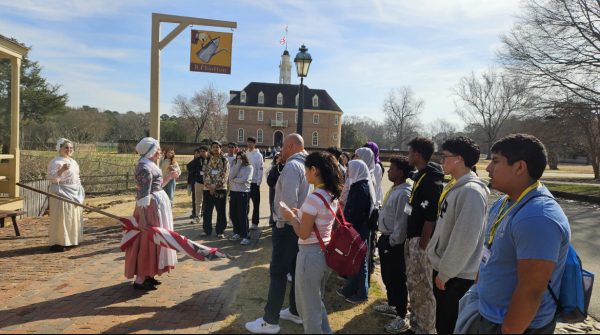 On Thursday, March 5, 2026, approximately 55 high school students participating in Edu-Futuro’s Emerging Leaders Program I (ELP-I) traveled to the historic campus of the College of William & Mary, one of the nation’s most prestigious postsecondary institutions. Students and Edu-Futuro staff gathered early in the morning for the nearly three-hour journey to the city of Williamsburg, where they were welcomed by university admissions staff and guided through a special campus tour.
For the majority of our ELP-I participants, the visit marked their first opportunity to explore a college campus outside of Northern Virginia. As they walked through the grounds, students experienced college life firsthand -- touring academic buildings, learning about student resources, and imagining themselves as future college students. For many, the experience helped transform the idea of higher education from something distant and abstract into something tangible and achievable.
Edu-Futuro’s ELP-I program is designed to prepare students for success in postsecondary education and beyond. Through a structured series of workshops, participants develop essential skills in resume preparation, job interviews, networking, financial literacy, public speaking, community service, and the college application process. The William & Mary visit provided a powerful extension of this learning experience, giving students the chance to see how these skills translate into real-world opportunities on a college campus.
“The reason I value the Edu-Futuro program is because it gives you insight into what to expect in the future and how to gain experience in the field you want to pursue,” said Yehiya, an 11th-grade student at George C. Marshall High School. “Instead of waiting until later in life to figure out your interests, this program helps you start that process now -- whether you’re unsure or already have a goal in mind.
“There’s always something new to learn,” he continued. “I really enjoyed the college tour because it shows you what to expect if you plan on going to college. You get a real sense of what campus life is like. Overall, I think there’s something to learn for everyone, and I would recommend this program to anyone.”
In addition to touring the campus, students attended a presentation led by admissions staff, who provided an overview of academic programs, student life, and the application process. Students remained highly engaged throughout the session, asking thoughtful questions and gaining valuable insight into what colleges look for in prospective applicants.
The impact of the visit extended beyond the campus itself. During the return trip, students reflected on their experiences, discussing what they liked -- and did not like -- about the university environment. These conversations encouraged them to begin thinking more critically about their future college choices, helping them identify the factors that matter most to them as they plan their next steps.
Facilitators also found the experience deeply rewarding. “One of the most memorable moments for me was having the opportunity to engage in one-on-one conversations with students throughout the tour,” said France Tomgambo-Kaye, an AmeriCorps State and National Facilitator. “Being able to connect with them in person, learn about their interests, and hear what stood out to them was incredibly meaningful. Looking ahead, I hope students come away with the understanding that college is not out of reach -- it’s something they can absolutely achieve,” she added. “By being on campus, experiencing the culture, and hearing directly from students and admissions staff, the idea of college becomes less intimidating. I also hope they gain a clearer sense of what they are looking for in a school and what matters most to them in their educational journey.”
The visit to the College of William & Mary represents a critical step in Edu-Futuro’s mission to empower students with the knowledge, confidence, and tools they need to pursue higher education. By combining classroom preparation with real-world experiences, our ELP-I program helps students envision their futures more clearly, and shows them how to take meaningful steps toward achieving their goals.
We encourage anyone interested in joining the ELP program to contact our staff about upcoming ELP-I sessions, which are offered three times each year. For more information on ELP, please contact Susana Carpio, our Youth Programs Team Lead, at youthprograms@edu-futuro.org.
Edu-Futuro Opens New Office Location in Western Fairfax
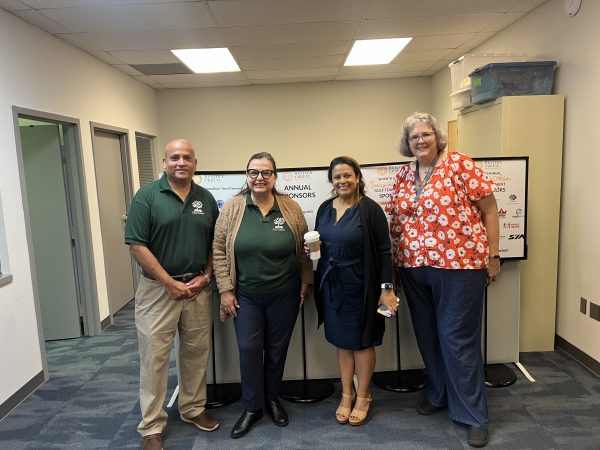 Edu-Futuro is proud to announce the opening of a new office location in Western Fairfax, made possible through a generous partnership with Western Fairfax Christian Ministries (WFCM). Located at 4511 Daly Drive in Chantilly, this shared space represents an important step forward in our continued effort to bring services closer to the families who need them most.
“We are deeply grateful to WFCM’s Executive Director, Harmonie Taddeo, and Deputy Director, Pamela Montesinos, for the opportunity to share their facility and expand our presence in the Chantilly community,” said Edu-Futuro Executive Director, Jorge Figueredo. “This collaboration allows us to extend our reach in meaningful ways and ensures that more families have access to the guidance, resources, and opportunities they need to succeed.”
Founded on the belief that all families deserve stability and dignity, WFCM works to ensure that individuals and families are both housed and nourished. Serving residents across Centreville, Chantilly, Clifton, Fairfax, Fairfax Station, Herndon, and Oak Hill, the organization provides a wide range of essential services, including food assistance through its client-choice food pantry, emergency financial support for rent and utilities, and holistic programs designed to promote long-term self-sufficiency. Their Chantilly location also includes a community market that allows families to select food in a respectful and empowering environment.
By co-locating within this vital community hub, Edu-Futuro is able to connect more directly with families already accessing services and to provide complementary support that addresses both immediate needs and long-term goals.
Through our new Chantilly office, Edu-Futuro will offer a range of services designed to support families on their path toward stability and success. These services include case management, individualized navigation support, and referrals for food, clothing, and rental assistance, as well as connections to education and workforce development programs. Our approach is rooted in cultural responsiveness and a deep understanding of the challenges faced by immigrant and Latino families.
“Having an office in Western Fairfax represents a meaningful step in bringing our services closer to the families we serve, especially those in the western region of Northern Virginia,” said Dulce Oliveros, Edu-Futuro’s Manager of Programs. “It allows us to build stronger relationships within the community and respond more effectively to their needs.”
The new location has been designed as a welcoming and accessible space where families can find trusted support, practical resources, and opportunities for growth. By embedding our services within a well-established and respected organization like WFCM, we are able to enhance coordination of care and ensure that families receive comprehensive, wraparound support. This expansion reflects Edu-Futuro’s ongoing commitment to meeting families where they are and removing barriers to access. As we continue to grow, we remain focused on building strong partnerships that amplify our impact and help create pathways to opportunity for the communities we serve.
For more information about our new office in western Fairfax, please contact our Manager of Programs, Dulce Oliveros, at managerofprograms@edu-futuro.org. If you or someone you know in western Fairfax County needs support, please feel free to send us a text message via WhatsApp at (571) 309-5455, or call our main office at (703) 228-2560.
Announcing Edu-Futuro’s Spring Fundraising Campaign
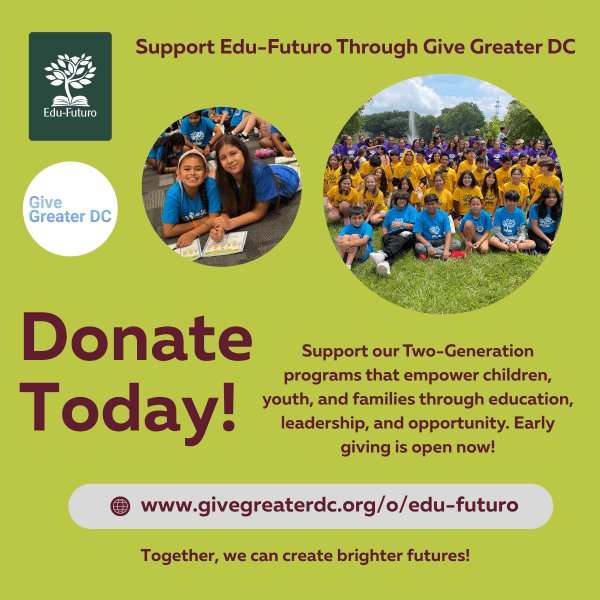 On Tuesday, May 12, the local nonprofit convener Spur Local is hosting a day of giving, Give Greater DC, to celebrate people making a meaningful difference throughout the Greater Washington, DC region. Edu-Futuro is proud to be one of more than 150 nonprofit organizations participating in this campaign – and we need your help! Please consider making a gift of any size to our campaign page; all donations will help cover the cost of our Edu-Family summer event this July, which will bring together an estimated 500 students and parents at George Mason University for a full day of activities designed to show them that a college education is within their reach.
While Give Greater DC officially takes place on May 12, early giving is open now; so if you’d like to help us build momentum toward our $5,000 goal, please consider making a donation today! And if you’re interested in pledging a larger gift that we can use as a match to encourage donations, please contact our Director of Development, Zachary Hoskins, at directorofdevelopment@edu-futuro.org.
AmeriCorps Corner: Nely Garcia
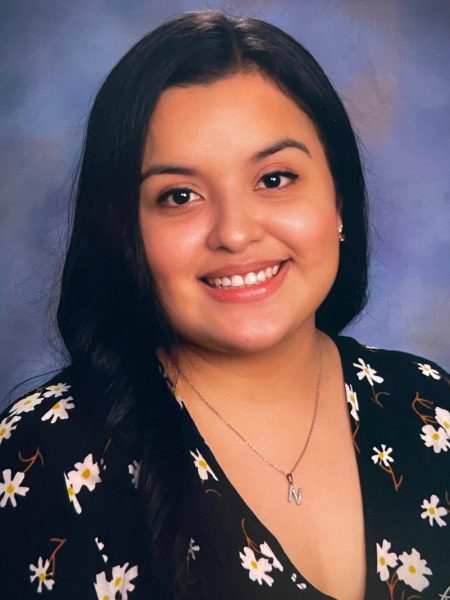 Edu-Futuro’s impact is made possible through the invaluable contributions of both AmeriCorps State and AmeriCorps VISTA members. Our cohort of AmeriCorps State members plays a critical role in the lives of our students and families by serving as facilitators in the Emerging Leaders Program (ELP) and Workforce Development Services (WDS). Meanwhile, our AmeriCorps VISTA members lead a variety of key capacity-building initiatives, including updating our beneficiary database and developing new curricula for students and parents. This space highlights the exceptional work of Edu-Futuro’s AmeriCorps members and VISTAs. Today, we are proud to feature AmeriCorps State member, Nely Garcia, whose dedication and impact have been deeply felt across our organization for the past four years. We are profoundly grateful for her service. This is her last year with us, and she will be greatly missed.
“My name is Nely Garcia, and I am currently serving as an AmeriCorps member with Edu-Futuro in the youth program. I have been with Edu-Futuro since 2022, and I am now in my fourth year of service. I hold a Bachelor of Science in Psychology, with a minor in Social Work and a concentration in Educational Psychology, which has shaped my passion for supporting students. I chose to serve with AmeriCorps and Edu-Futuro because I value giving back to my community and helping young people reach their full potential. As a former participant in the ELP-I program during high school, I was inspired to return and give back to a program that played an important role in my own journey.
“In my role, I collaborate with Edu-Futuro to support families through college readiness and career exploration programs. I facilitate tailored workshops designed to meet the unique needs of diverse student populations. Additionally, I provide individualized mentorship and guidance to high school seniors, empowering them with essential resources for college preparation. The primary beneficiaries of my work are immigrant and first-generation students -- many from historically underserved communities -- along with their families. One of the most rewarding aspects of my work is seeing students gain confidence and take meaningful steps toward their future goals. Through my mentorship and support, two of my mentees were awarded the Edu-Futuro Dr. Marjorie L. Myers Scholarship, each receiving $5,000 toward their education.
“Serving in this position means a great deal to me because it allows me to directly impact the lives of students in my community. Through this experience, I have strengthened my skills in mentorship, communication, and culturally responsive support. It has deepened my commitment to educational equity and reinforced my passion for helping students succeed. This role continues to inspire me to pursue work that creates lasting, positive change.”
For more information on Edu-Futuro’s AmeriCorps programs, please contact Joy Harvey, AmeriCorps Programs Coordinator, at americorps@edu-futuro.org.
Financial Tip
Protecting Your Family from Phone Scams Targeting Immigrant Communities
 Phone scams have become one of the most common and dangerous forms of fraud in the United States, with immigrant families facing particular risk. Criminals often exploit fear, language barriers, and unfamiliarity with government systems to pressure individuals into sharing personal information or sending money. Understanding how these scams work -- and how to respond -- can help families stay safe.
Recent data from the Federal Trade Commission (FTC) highlights the growing scale of the problem. In 2024 alone, more than 2.6 million fraud reports were filed nationwide, with losses reaching $12.5 billion, a sharp increase from previous years. Phone calls remain a major method used by scammers, especially in cases involving impersonation of government agencies or trusted institutions.
Research also shows that vulnerability to phone-based scams does not always depend on education or awareness. A national study of over 1,000 U.S. mobile users found that many participants struggled to distinguish real messages from fraudulent ones, even when familiar with the organization being impersonated. This finding underscores how convincing and sophisticated scams have become.
Why Immigrant Families Are Often Targeted
Scammers frequently target immigrant communities because of specific pressures many families face. Calls may claim to come from immigration authorities, police, or government agencies, often threatening arrest, deportation, or loss of benefits. In some cases, scammers pose as “notarios,” or legal advisors, and demand payment for services that should be free or provided by licensed professionals.
Advocacy organizations and legal groups report that scams increasingly spread through phone calls combined with messaging apps such as WhatsApp, where fraudsters impersonate attorneys or officials and build trust over time. These tactics rely on urgency and fear. A caller may insist that immediate payment is required to “fix” a problem or prevent serious consequences. Once money is sent -- often through gift cards, wire transfers, or prepaid cards -- recovery becomes extremely difficult.
Common Types of Phone Scams
Families should be aware of several frequent scam patterns:
- Government impersonation calls: Someone claims to represent immigration authorities, Social Security, or law enforcement and demands payment or personal information.
- Threat-based scams: Callers warn of arrest, deportation, or legal trouble unless immediate action is taken.
- “Notario” or legal service scams: Individuals offer help with immigration paperwork, but lack authorization to provide legal services.
- Prize or benefit scams: Victims are told they have won money or qualify for benefits, but must first pay a fee.
Each of these scams relies on pressure, confusion, and a sense of urgency to push individuals into quick decisions.
Warning Signs to Watch For
Recognizing red flags can prevent harm. Be cautious if a caller:
- Demands immediate payment
- Requests payment through gift cards, wire transfers, or prepaid cards
- Asks for sensitive personal information such as Social Security or ITIN numbers
- Refuses to provide written documentation
- Threatens arrest, deportation, or legal consequences
Legitimate government agencies do not demand payment over the phone or threaten immediate punishment.
How to Protect Yourself and Your Family
Taking a few simple steps can significantly reduce risk:
- Pause before responding: Scammers rely on urgency. Taking time to verify information can prevent mistakes.
- Verify independently: Hang up and contact the agency directly using an official phone number.
- Do not share personal information: Avoid giving out identification numbers, bank details, or passwords over the phone.
- Discuss scams with family members: Conversations at home can help everyone recognize suspicious calls.
- Block and report suspicious numbers: Reporting helps authorities track patterns and protect others.
If a scam occurs, reporting will not affect immigration status. The FTC encourages all victims to come forward so patterns can be identified and stopped.
Building Awareness in the Community
Education remains one of the most powerful tools in preventing fraud. Studies show that many victims hesitate to report scams due to embarrassment or uncertainty about where to seek help. By sharing information openly and supporting one another, communities can reduce the effectiveness of these schemes. At Edu-Futuro, helping families stay informed and protected is part of a broader commitment to strengthening opportunity and stability. Awareness of common scams, combined with practical prevention strategies, empowers families to make confident decisions and avoid financial harm.
Health & Wellness
Tobacco Use and Academic Success: What Families Need to Know
 Academic success depends on many factors, including focus, attendance, motivation, and mental well-being. Increasing evidence shows that tobacco use during adolescence can undermine each of these areas, creating barriers that extend far beyond physical health. For families and educators, understanding this connection can play an important role in helping young people stay on track in school and reach long-term goals.
A growing body of research demonstrates a clear relationship between tobacco use and lower academic performance. A 2023 study published in the International Journal of Environmental Research and Public Health found that smoking status and nicotine dependence were strongly associated with lower grades, higher absenteeism, and increased academic warnings among students. These findings highlight how tobacco use can interfere not only with health, but also with daily academic engagement and long-term educational progress.
Additional evidence reinforces this connection. Data from the 2024 California Healthy Kids Survey, analyzed by researchers at the University of California, Davis, examined responses from more than 287,000 high school students across the state. Results showed that students who used tobacco products reported lower average grades and missed more school days compared to peers who did not use tobacco. Students who combined tobacco use with other substances faced even greater challenges, including significantly higher rates of absenteeism. Consistent school attendance remains one of the strongest predictors of academic success, making these findings especially concerning.
Why Tobacco Use Affects Learning
Nicotine, the addictive substance found in tobacco products, has a direct impact on the developing adolescent brain. During the teenage years, brain development continues in areas responsible for attention, memory, and decision-making. Exposure to nicotine can disrupt these processes, making concentration more difficult, reducing the ability to retain information, and limiting a student’s capacity to manage complex academic tasks.
Research also points to broader behavioral patterns. A 2023 systematic review published in Addictive Behaviors Reports examined more than 30 studies and found consistent links between tobacco use and poor academic achievement, reduced school engagement, and increased truancy. These patterns suggest that tobacco use often intersects with other challenges that affect academic success. Students experiencing academic difficulties may feel discouraged, while tobacco use can further reduce motivation and connection to school -- creating a cycle that becomes increasingly difficult to break.
The Role of Attendance and Engagement
Attendance plays a critical role in academic success, and tobacco use appears to interfere with consistent participation in school. Students who use tobacco products report higher rates of missed school days, which can lead to falling behind in coursework and reduced opportunities for academic support.
Engagement in the classroom also declines. Students affected by nicotine dependence may experience restlessness, irritability, or difficulty focusing during lessons. Over time, these challenges can limit participation, weaken academic confidence, and reduce meaningful interaction with teachers and peers.
Even students who do not use tobacco directly can experience negative effects. A study published by researchers at California State University, Sacramento found that students exposed to secondhand smoke at home were significantly more likely to report poor academic performance compared to those in smoke-free environments. This finding highlights the importance of maintaining healthy, smoke-free spaces that support learning and development.
What Families Can Do
Families play a key role in supporting academic success and reducing risk. Open conversations about tobacco use and its effects can help young people make informed decisions. Discussions that focus on long-term goals -- such as college, careers, and personal aspirations -- can strengthen motivation and reinforce the importance of healthy choices. Monitoring changes in behavior also matters. Sudden declines in grades, increased absences, or reduced interest in school activities may signal a need for additional support. Early attention can prevent small challenges from becoming larger obstacles.
Schools and community organizations also serve as critical partners. Programs that provide mentorship, academic support, and career guidance can help students stay engaged and focused on future opportunities. When students feel connected and supported, the likelihood of risky behaviors decreases.
Protecting academic achievement requires more than strong study habits -- educational success also requires healthy choices. With the right support, guidance, and information, students can build a foundation that promotes both progress in the classroom and lifelong well-being.
Edu-Futuro’s Strengthening Families 10-14 Program, which helps teens to reduce such risky behaviors as tobacco use and vaping, is sponsored in part by a generous grant from the Virginia Foundation for Healthy Youth (VFHY), empowering Virginia's youth to make healthy choices by promoting active, nutritious and tobacco-free living.