Table of Contents
Buy Your Tickets and Join Us for Edu-Futuro’s 28th Anniversary Gala!
Edu-Futuro Families Meet Legislators in Richmond
Edu-Futuro’s Associate Council: Serving Students and Parents
Breaking the Silence About Endometriosis: A Línea Directa Program Goes Viral
Edu-Futuro Volunteer Spotlight: Ding-Lynn Ledgard
AmeriCorps Corner: Dante Calfayan
Financial Tip: Protecting Families from “Notario” Immigration Scams
Health & Wellness: Why Tobacco and Vaping Can Disrupt the Developing Teen Brain
Buy Your Tickets and Join Us for Edu-Futuro’s 28th Anniversary Gala!
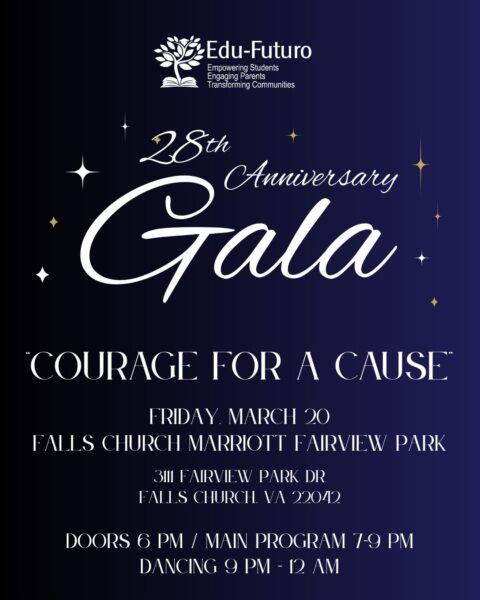 Tickets are still available for Courage for a Cause -- Edu-Futuro’s 28th Anniversary Gala! We cordially invite you to a night of unity on Friday, March 20, as we gather with friends to recognize the courage, resilience, and determination of the nearly 5,000 students and parents we are privileged to serve each year throughout Northern Virginia. Returning as our Host this year will be NBC4-Washington and Telemundo 44 reporter, Juliana Valencia!
During the evening, we will be honoring our community partners, and hearing the inspiring testimonies of students who are well on their way to college and professional careers. Like last year, the Gala will be held at the Falls Church Marriott Fairview Park, from 6:00 to 9:00 p.m. After the main program, live music will take over, and guests will have the opportunity to dance until midnight.
To purchase tickets to the Gala, please visit our website. See you on Friday!
Edu-Futuro Families Meet Legislators in Richmond
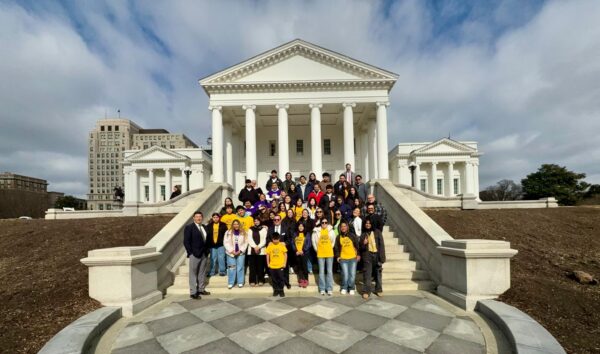 This past President’s Day, while many people were enjoying the national holiday, Edu-Futuro staff and AmeriCorps members traveled to Richmond with more than 50 students and parents for our annual Civic Engagement Day. Early on Monday, February 16, our families made the 107-mile journey from Arlington to the capital of the Commonwealth for the opportunity to see democracy in action at the Virginia General Assembly, and to meet directly with the legislators who represent their communities.
Throughout the day, Edu-Futuro youth and parents met with the offices of several elected officials, including Senators Barbara Favola (40th District), Saddam Azlan Salim (37th District), and Stella Pekarsky (36th District), as well as Delegate Michelle Maldonado (20th District) and Deputy Secretary of Education Connor Andrews. During these meetings, our families learned how proposed bills move through the legislature to become law, and asked thoughtful questions about issues that directly affect their lives, including increasing financial aid for college students, addressing rising housing costs, and planning for the possibility of large-scale federal operations in Northern Virginia.
One of the highlights of the day came when 25 of our beneficiaries were invited to tour the Senate Chamber of the Virginia General Assembly. As our families watched from the gallery, Senator Pekarsky stood to publicly recognize the work of Edu-Futuro and asked her fellow senators to applaud the accomplishments of our students and parents. After the initial applause, Lieutenant Governor Ghazala Hashmi -- who serves as President of the Senate -- offered her own remarks recognizing the work of Edu-Futuro. For many years, Senator Hashmi has been one of the legislators who meets directly with our families during Civic Engagement Day, and she remains deeply supportive of our mission and programs.
Our families also had the rare opportunity to witness history in the making. During their visit to the Senate Gallery, state senators approved legislation that would gradually raise Virginia’s minimum wage from the current $12.77 per hour to $15 by 2028. The measure later passed the House of Delegates and is now awaiting the governor’s signature. For many of the students and parents observing from the gallery, watching the debate and final vote provided a powerful real-world lesson in how public policy is shaped. The moment underscored how the decisions made inside the General Assembly can directly affect the economic wellbeing of working families across the Commonwealth.
“Putting together Civic Engagement Day has been one of my most rewarding experiences with Edu-Futuro,” said María García-Hernández, one of the Youth Program Specialists accompanying our families to Richmond. “When I was asked to help plan and organize the event, I didn’t hesitate to say yes. Civic engagement is something I deeply care about. This experience allowed me to show students and their families that their voices matter and that they can create real impact. Our day was a huge success because everyone left Richmond more informed, empowered, and confident than when they first walked into the General Assembly that morning.”
For many of the students who traveled to Richmond, the experience offered a powerful example of how civic engagement can impact legislation. Najam Mamun, a tenth-grade student in Edu-Futuro’s Emerging Leaders Program, reflected on how the visit changed his perspective.
“This experience had a huge impact on how I see our government,” Najam said. “We got to meet multiple chiefs of staff and legislative assistants, and we learned more about their tasks and the issues they are actively addressing. I didn’t realize before that you could schedule a meeting with senators and their assistants, and talk to them about your troubles. This made me feel more secure and assured about the representatives of our state.” For Najam, the day also reinforced the importance of youth voices in the democratic process. “Being a young person in such a professional environment made me feel like my voice was valued and important. The fact that the senators and chiefs of staff talked about improvements and bills addressing school environments so much shocked me at how much they valued the youth of the state. I am incredibly grateful to the Edu-Futuro leaders for providing this experience! I got to see and learn new things, make memories, and meet new people that I now consider good friends.”
For more information about Edu-Futuro’s Emerging Leaders Program, please contact Susana Carpio, Youth Programs Team Lead, at youthprograms@edu-futuro.org. Edu-Futuro’s Emerging Leaders Program (ELP) is supported in part by grants from the Verizon Foundation and Impact100 DC.
Edu-Futuro’s Associate Council: Serving Students and Parents
 With our 28th Anniversary Gala quickly approaching, all of us at Edu-Futuro would like to thank the members of the Associate Council for their invaluable support in preparing for our most important fundraising event of the year. The Associate Council is a group of young professionals who care deeply about our community, and volunteer their time to support the mission and programs of Edu-Futuro. We are proud to highlight three members of the Associate Council, whose commitment reflects the passion and leadership that help drive our community forward.
Rai Rocca -- “I was born in Peru and raised in Northern Virginia, and I first became involved with Edu-Futuro as a student in the Emerging Leaders Program. At a formative moment in my life, the program helped me see education as a pathway -- one supported by mentors, community, and a broader sense of possibility.
“Two words stand out when I think about my time with Edu-Futuro: joy and dedication. My experiences with the organization stayed with me, which is why I volunteer through the Associate Council as Public Relations Officer. What resonates most with me about Edu-Futuro’s mission is its unwavering commitment to strengthening our communities, especially where opportunity has not always reached everyone equally. Through this work, students gain confidence in their voice, their background, and the futures they are capable of shaping.”
Fransheska Durán -- “I currently serve as the Vice President of the Associate Council for Edu-Futuro. I was inspired to get involved because I strongly believe in expanding opportunities for students and families through education, mentorship, and community support. What keeps me engaged is seeing the real impact this work has, watching students grow in confidence, and realizing their potential.
“The part of Edu-Futuro’s mission that resonates most with me is empowering students to become leaders in their communities. Creating pathways for young people to access opportunities and build their futures is something I care deeply about. I hope students feel empowered to pursue their ambitions with confidence and that families feel supported by a strong and uplifting community. Long term, I hope many of these students return as mentors and leaders for the next generation. This work matters because access to opportunity can truly change the trajectory of a life.”
Mia Buswell -- “I am a recent graduate of James Madison University with a passion for increasing global human security. I fundamentally believe in the ability of education to transform lives and communities, and was drawn to Edu-Futuro because of its shared mission. As someone who works in a public elementary school, I see every day the importance of education in uplifting students and their families, which is why I choose to remain engaged with Edu-Futuro and its life-changing efforts.
“I most resonate with Edu-Futuro’s mission to support emerging leaders, as I believe students, no matter how young, have the capacity to change the world. Edu-Futuro’s Emerging Leaders Program helps foster the confidence of young people to represent themselves and their communities. I hope that the impact of Edu-Futuro’s work is to show the importance of education that reflects the strengths and needs of diverse communities. Education isn’t one-size-fits-all, and I hope that this work shows how much we collectively thrive when we work together strategically to uplift one another. As Nelson Mandela said, ‘Education is the most powerful weapon which you can use to change the world.’”
For any questions related to our 28th Anniversary Gala or our Associate Council, please contact our Director of Development, Zachary Hoskins, at directorofdevelopment@edu-futuro.org.
Breaking the Silence About Endometriosis: A Línea Directa Program Goes Viral
 In December 2025, Edu-Futuro's public service television series, Línea Directa, broadcast a special program featuring the story of Stefani Gamboa, who bravely spoke about her journey living with endometriosis, a chronic, painful, and often misunderstood health condition affecting millions of women across the United States. The half-hour show, produced by Edu-Futuro Communications Coordinator and Línea Directa Host Andrea Sarralde, has already been broadcast twice by the popular Spanish-language station Telemundo 44.
The program helped amplify Stefani’s voice and brought attention to a disease that affects millions of women, but is still rarely discussed openly in many communities. Stefani is very active on social media, where she hosts a lifestyle, motherhood, and inspiration blog, and raises awareness about endometriosis.
The public response to our Línea Directa program has been extraordinary. After the interview aired and was shared on social media by Stefani, the video reached nearly 900,000 views on Instagram, sparking thousands of reactions and conversations. Many women and families wrote to Stefani to share their own experiences or to say they had never heard the condition explained so clearly before. This powerful engagement demonstrates how storytelling and media can play a crucial role in raising awareness about health issues that impact the Latino community.
“For years, I thought the pain was normal. Sharing my story is my way of helping other women understand that they deserve answers, support, and proper medical care. No woman should feel alone or ignored when it comes to her health,” said Stefani. “Seeing that nearly 900,000 people have watched my story is incredibly emotional for me. It tells me that this conversation matters, and that so many women may be going through the same pain in silence. If my experience helps even one woman seek help sooner or feel less alone, then sharing my story was worth it.”
Endometriosis is a chronic disease in which tissue similar to the lining of the uterus grows outside the uterus, often causing inflammation, severe pelvic pain, heavy menstrual cycles, fatigue, and sometimes infertility. Globally, the condition affects about one in ten women of reproductive age -- approximately 190 million women worldwide. Despite how common the condition is, many women experience long delays before receiving a proper diagnosis, and symptoms are often dismissed as “normal” menstrual pain.
Through programs like the special episode of Línea Directa, Edu-Futuro continues to elevate community voices and bring attention to important issues affecting Latino families. We invite you to watch Línea Directa on Saturday mornings, at 11:00 a.m., on Telemundo 44. If you would like to watch our Línea Directa program on endometriosis, please click this link. For more information on our public service television series, please contact our Communications Coordinator, Andrea Sarralde, at andreas@edu-futuro.org.
Edu-Futuro Volunteer Spotlight: Ding-Lynn Ledgard
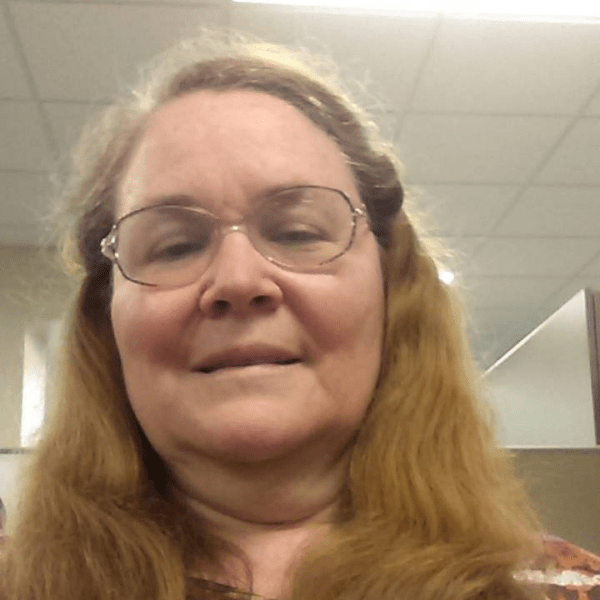 In order to meet the needs of our community, Edu-Futuro staff depend on the invaluable partnership and support of generous volunteers who offer their time, knowledge, and lived experience to serve our families and strengthen the long-term sustainability of Edu-Futuro’s work. This month, we are proud to highlight the remarkable contributions of Ding-Lynn Ledgard, who will be joining us at our 28th Anniversary Gala this Friday to accept our inaugural Special Recognition Award for volunteer service.
“Ding-Lynn has supported our program consistently since October 2024, providing deep knowledge in every module, and enriching classes with her vast cultural and professional background,” said Mildrek Bastidas, GED Instructor and Workforce Development Specialist. “She not only seeks out supplemental learning resources to ensure students are prepared for their official exams, but she also offers additional tutoring in mathematics, always encouraging students to achieve their academic goals. Her dedication is exceptional, as she remains available to students any day of the week and enthusiastically joins us for every certificate delivery ceremony. Her hard work has been fundamental to the success of the GED program and the well-being of our beneficiaries.”
Ding-Lynn Ledgard was born in Peru and moved to Spain at the age of fifteen, where she completed high school and began her university studies. She later came to the United States and earned a Bachelor of Science in Mathematics. However, her academic journey was not linear. A full ten years passed before completion of the degree, an experience that shaped her belief that the timing of education matters far less than the perseverance and dedication invested in learning.
“My path to volunteering with Edu-Futuro began with my son, who is on the autism spectrum,” said Ding-Lynn. “Although he completed high school, I recognized gaps in his academic preparation and enrolled him in the GED program at Arlington Public Schools. Through that experience, I witnessed the transformative power of second-chance education. What began as support for my son became a calling to serve others.
“Since November 2024, I have volunteered as a co-teacher in Edu-Futuro’s GED Certification Program, specializing in mathematics. I work with Spanish-speaking immigrants who begin at different educational levels, but share a determination to build better futures. I value Edu-Futuro’s intergenerational and multicultural approach, where teachers and students learn from one another and grow together.
“The moments that remind me most why this work matters are the end-of-module celebrations and the messages from students sharing that they passed one of their four GED examinations. Each success is deeply moving -- especially when students describe the doors now opening to them: higher-paying jobs, new careers, college opportunities, and the chance to become role models for their children. I look forward to celebrating their continued progress and hope to see every student earn a GED diploma in June 2026.”
Edu-Futuro’s Volunteer Program offers opportunities with a variety of time commitments throughout the year. For more information on our upcoming volunteer opportunities please contact Edu-Futuro’s Volunteer Coordinator, Mariana Balgurevich, at volunteer@edu-futuro.org.
AmeriCorps Corner: Dante Calfayan
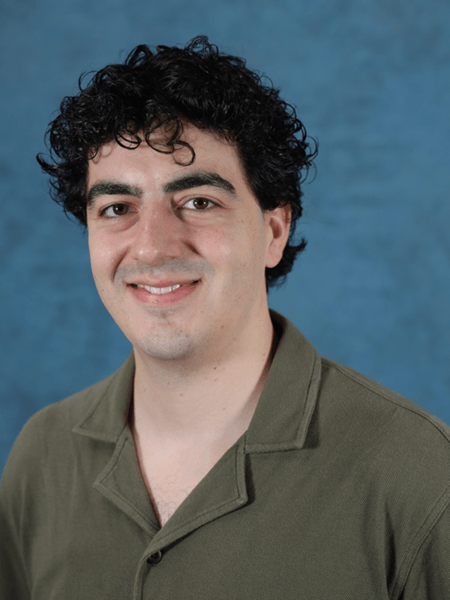
Edu-Futuro’s impact is made possible through the invaluable help of both AmeriCorps State and AmeriCorps VISTA members. Our cohort of AmeriCorps State members play a critical role in the lives of our students and parents by serving as facilitators in the Emerging Leaders Program and Workforce Development Services. Meanwhile, our AmeriCorps VISTA members work in a variety of key capacity building projects, including the updating of our beneficiary database and development of brand-new curricula for students and parents. This is our corner to highlight the great work being done by Edu-Futuro’s AmeriCorps members and VISTAs. Today, we say goodbye to Americorps VISTA Leader, Dante Calfayan, whose numerous contributions to Edu-Futuro during his two years of service have made a significant difference to the work of our staff, as well as to our students and parents. Here are Dante’s parting thoughts:
“After graduating from college, then spending a few years working in construction and contract administration, I longed to connect more with my local community. AmeriCorps VISTA gave me that chance to not only connect, but to turn that connection into a career. I started as the first AmeriCorps VISTA member that Edu-Futuro invited in early 2024, and now more than two years later, I am ready to move onto new steps in my career that I didn't know were possible. As Research Specialist and then VISTA Leader, I grew from developing proposals and process improvements into serving as a bridge between individual VISTA members, Edu-Futuro staff, and external resources.
“Serving two terms with AmeriCorps VISTA, especially with Edu-Futuro, has been deeply rewarding. This role has launched me into a career of nonprofit program management, something I didn't anticipate when I started two years ago, and I am so grateful for learning this about myself.
“My favorite part of serving as an AmeriCorps VISTA member has been connecting with my fellow team members in Edu-Futuro, both staff and AmeriCorps service members alike, as well as with the many beneficiaries that I would interact with during events or visiting programs. This organization is full of people from different backgrounds and experiences that are all brought together to serve our local community.
“Both AmeriCorps and Edu-Futuro will always have a special place in my heart as a meaningful step in my journey. I would encourage anyone who is interested in service to join your local AmeriCorps program, and get involved in your community nonprofit organizations like Edu-Futuro. While I’ll miss my service with AmeriCorps VISTA, I know I’ll always be a part of the Edu-Futuro family.”
For more information on Edu-Futuro’s AmeriCorps VISTA program and Edu-Futuro’s AmeriCorps State program, please contact Joy Harvey, AmeriCorps Programs Coordinator, at americorps@edu-futuro.org.
Financial Tip
Protecting Families from “Notario” Immigration Scams
 Across the United States, immigration fraud known as “notario scams” continues to harm thousands of immigrant families searching for trustworthy legal guidance. Rising immigration enforcement actions and heightened public attention to federal policy have created fear and uncertainty in many communities -- conditions that dishonest actors frequently exploit by offering false promises of legal assistance.
In many Latin American countries, the title “notario” refers to a highly trained legal professional with authority to provide legal services. In the United States, however, a notary public does not hold authority or training to provide immigration legal advice. Fraudulent operators often take advantage of this confusion, advertising services that promise visas, work permits, or legal status in exchange for large payments.
Research confirms the widespread nature of immigration-related fraud. A national analysis conducted by researchers at the University of California, Santa Cruz examined thousands of immigration scam reports and found patterns of deception targeting immigrant communities across the country. Victims often sought assistance during periods of uncertainty surrounding immigration policy or enforcement activity. Such moments frequently create vulnerability that scammers exploit.
“Notario scams” can cause devastating consequences. Many victims lose thousands of dollars for services that never occur. Incorrectly filed forms, missed deadlines, or fraudulent documents can also damage legitimate immigration cases. In some situations, families face additional legal complications because of mistakes made by unqualified consultants.
Several warning signs may help families recognize potential fraud. First, immigration legal advice should come only from licensed attorneys. A qualified immigration lawyer holds a law degree and a valid license to practice law in at least one U.S. state. Many reputable immigration attorneys also belong to the American Immigration Lawyers Association (AILA), the national professional organization for immigration law practitioners. Membership in AILA signals professional commitment to ethical standards, continuing education, and specialized knowledge of immigration law.
Families can verify attorney credentials through state bar associations or by reviewing professional profiles that list bar membership and legal qualifications.
Another warning sign involves promises that sound unrealistic. Fraudulent providers often guarantee work permits, green cards, or immediate legal status. U.S. immigration law rarely allows guarantees, and responsible attorneys carefully explain both opportunities and risks in any immigration case.
Requests for large cash payments or refusal to provide written agreements also raise concern. Legitimate legal professionals normally offer written contracts that clearly explain services, timelines, and fees. Transparent communication protects both the attorney and the client.
Community education represents one of the strongest defenses against immigration fraud. When families understand basic consumer protections, dishonest actors lose the advantage created by confusion or fear. Trusted community organizations, legal aid programs, and immigrant-serving nonprofits frequently provide reliable information about safe ways to seek legal assistance.
Families searching for immigration help should consider several practical steps before paying any fees:
- Confirm that a provider holds a valid law license in a U.S. state.
- Look for attorneys who participate in professional organizations, such as the American Immigration Lawyers Association (AILA).
- Request written documentation describing services and costs.
- Avoid large payments without clear contracts and receipts.
Stories from affected families show why awareness remains essential. Many victims simply hoped to find guidance during complicated moments in their lives. Instead of receiving legitimate assistance, many encountered deception that caused financial loss and emotional stress. Consumer protection begins with information. When communities share knowledge about “notario scams” and encourage careful verification of legal services, immigrant families gain stronger protection from fraud and greater access to trustworthy legal support.
Health & Wellness
Why Tobacco and Vaping Can Disrupt the Developing Teen Brain
 For many years, public health discussions about tobacco focused mainly on lung disease and cancer. New scientific research highlights another serious concern: nicotine exposure during adolescence can interfere with normal brain development.
Human brain development continues well beyond the teenage years. Information from the Centers for Disease Control and Prevention’s Youth Tobacco Prevention initiative (updated in 2024) explains that brain development continues until approximately age 25, particularly in regions responsible for attention, decision-making, emotional regulation, and impulse control. Nicotine exposure during these years can harm those developing systems and alter normal neurological growth.
During adolescence and early adulthood, brain networks responsible for learning, memory, and self-control undergo rapid change. Neural connections strengthen or disappear based on behavior and experience. Nicotine exposure during that critical period can disrupt those processes and increase vulnerability to addiction.
Researchers have documented that vulnerability in several recent studies. A 2025 analysis published in the CDC journal Preventing Chronic Disease, titled “Youth Nicotine Dependence and Patterns of Tobacco Use,” found that adolescents can develop symptoms of nicotine dependence quickly -- even before daily tobacco use begins. Such findings reflect the unique sensitivity of the adolescent brain to nicotine exposure.
Nicotine also affects brain regions responsible for concentration and emotional regulation. According to the CDC’s Health Effects of E-Cigarettes and Nicotine research summary (updated in 2024), nicotine exposure during adolescence can damage areas that control attention, learning, mood, and impulse control. Such neurological changes may influence school performance as well as emotional wellbeing.
Modern nicotine products may intensify those risks. Electronic cigarettes, nicotine pouches, and vaping devices often contain high concentrations of nicotine designed to deliver rapid stimulation to the brain. Such products can create strong addiction patterns in teenagers whose brains remain especially sensitive to nicotine’s chemical effects.
Additional evidence appears in the 2025 Stanford Medicine research briefing “Young People and Nicotine: Five Things to Know.” Researchers from Stanford University describe how nicotine stimulates dopamine-producing neurons that regulate reward and motivation. Reinforcement of those neural pathways can strengthen addiction patterns and increase the likelihood of long-term nicotine dependence among young users.
Long-term consequences may extend beyond addiction alone. Some studies associate adolescent nicotine exposure with increased risks of anxiety, depression, and difficulty concentrating. Withdrawal from nicotine can also trigger irritability, sleep disruption, and mood changes among teenagers who develop dependence.
Public health agencies emphasize that early exposure creates the greatest danger. The U.S. Food and Drug Administration’s Nicotine Addiction Science Review (updated in 2024) explains that adolescents face a significantly higher risk of nicotine dependence than adults because of ongoing brain development and heightened neurological sensitivity. Such findings help explain why prevention efforts focus strongly on middle school and high school populations. Many adult smokers report first tobacco use before age eighteen. Early experimentation can therefore create pathways that lead to long-term addiction.
Parents, educators, and community leaders can play a critical role in prevention through awareness and open communication. Many teenagers believe vaping represents a safer alternative to cigarettes. Scientific evidence shows, however, that nicotine exposure from any source can affect brain development during adolescence.
Education about brain development can provide a powerful prevention message. Teenagers often view long-term health risks such as cancer as distant concerns, yet the idea of brain development during current teenage years carries greater immediate relevance. Understanding how nicotine interferes with learning, concentration, and emotional control can influence decision-making during adolescence.
Scientific evidence continues to grow, yet one conclusion remains clear: adolescence represents a critical period for brain development. Avoiding nicotine exposure during those years helps ensure that the brain reaches adulthood with full potential for learning, resilience, and healthy decision-making.
Edu-Futuro’s Strengthening Families 10-14 Program, which helps teens to reduce such risky behaviors as tobacco use and vaping, is sponsored in part by a generous grant from the Virginia Foundation for Healthy Youth (VFHY), empowering Virginia's youth to make healthy choices by promoting active, nutritious and tobacco-free living.